


IP class explained Leave a comment


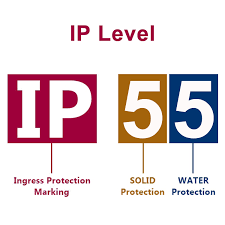
IP protection levels consist of two numbers:
First digit: Protection against foreign bodies (solid objects).
0: No protection
1: Protected against solid objects larger than 50 mm (e.g. accidental contact with a hand)
2: Protected against solid objects up to 12 mm (e.g. fingers)
3: Protected against solid objects larger than 2.5 mm (e.g. tools and wires)
4: Protected against solid objects larger than 1 mm (e.g. small tools and wires)
5: Protected from dust, limited access (e.g. harmful dumping)
6: Fully protected against dust
Second number: Protection against liquids.
0: No protection
1: Protection against vertically falling water droplets (e.g. condensation)
2: Protection against drops of water falling up to 15 degrees from the vertical
3: Protection against drops of water falling up to 60 degrees vertically
4: Protection against water spray from all directions – limited access permitted
5: Protected against low-pressure water jets from any direction – limited access permitted
6: Protected against high pressure water jets (for use on ship deck) – limited access permitted
7: Protected against the effects of immersion from 15 cm to 1 m deep
8: Protected against prolonged immersion under pressure
Common IP protection levels
The most common IP protection levels are IP67, IP65, IP44 and IP20. Depending on the risk of water ingress in each zone, you will need bathroom lighting with the appropriate protection level. To avoid electric shock, make sure your bathroom lighting has the appropriate IP protection level, which indicates which zones it can be used in.
Summary
Understanding bathroom IP zones is essential for safety and regulatory compliance. By choosing luminaires with the appropriate IP rating for each zone, you can create a safe and stylish bathroom environment.
